
Many energy-intensive businesses have already committed to decarbonisation. One major UK construction materials and quarrying business operates around 300 sites and consumes significant volumes of electricity, gas, LPG and diesel. Its challenge was understanding whether its estate had the electrical capacity to support its decarbonisation ambition.
The organisation recognised that electrification could provide a more sustainable way to power operations. However, it was unclear whether the existing electrical infrastructure could support the increased demand across such a large and diverse portfolio. To understand where electrification could be technically and commercially viable, Mitie assessed:
- Current and future energy demand
- Grid readiness
- Site-level infrastructure constraints
At this scale, decarbonisation could not be approached as a series of disconnected projects, as each decision had knock-on implications for infrastructure, operational resilience and future investment. The assessment by Mitie demonstrated why an organisation with high energy demands needs to look beyond ambitious carbon targets and new technologies. It was crucial to gain clear understanding of grid readiness, site constraints and future energy demand before electrification could be delivered at scale.
Huge scale of challenge
When Mitie modelled current and future electrical demand across more than 200 of the business’s operational sites, the findings highlighted the scale of the challenge. The majority of sites would require electrical upgrades to support widespread electrification, while a number were already operating beyond existing capacity thresholds. Heat electrification presented the greatest challenge, with many process sites requiring substantial increases in electrical capacity that would be difficult or in some cases impossible to secure.
This is where many industrial decarbonisation strategies begin to fall apart.
Electrification is not the flick of a switch
Too often, organisations assume the increased electricity demand that comes with electrification can be met at the flick of a switch. But the local grid may not have enough capacity to support it. Increasing that capacity can take time, require significant investment and, in some locations, may not be feasible.
The lesson is that electrification should not be viewed as a single solution applied across an entire estate. Different sites require different pathways depending on their operational requirements and infrastructure constraints.
Where electrical capacity exists, technologies such as heat pumps, electric boilers and thermal storage may provide the most effective route forward. Where grid constraints are more significant, alternative fuels such as hydrogen or biofuels may offer a more practical transition. Some locations may benefit from access to district heat networks. Successful decarbonisation is therefore about matching the right technology to site conditions rather than forcing every location down the same route.
Charging strategy must be carefully planned
The same principle applies to transport electrification.
The assessment showed that electrifying heavy vehicles and mobile plant could significantly increase site demand unless charging strategies were carefully planned. Load balancing, import limitation and intelligent charging schedules become just as important as selecting the vehicles themselves. In industrial environments, fleet electrification is no longer simply a transport decision, it is an estate energy decision.
The review by Mitie also highlighted another often-overlooked factor: location.
For some sites, the issue was not simply how much electricity was required but whether sufficient grid capacity existed nearby. The assessment considered how close each site was to a suitable grid connection, whether the local network had enough capacity and how much any upgrades would cost. Together, these factors determined whether electrification was commercially viable.
On-site generation is transformative
Perhaps the most valuable insight, however, was that the estate should not be viewed purely as a consumer of energy. On-site generation was in fact a very credible option.
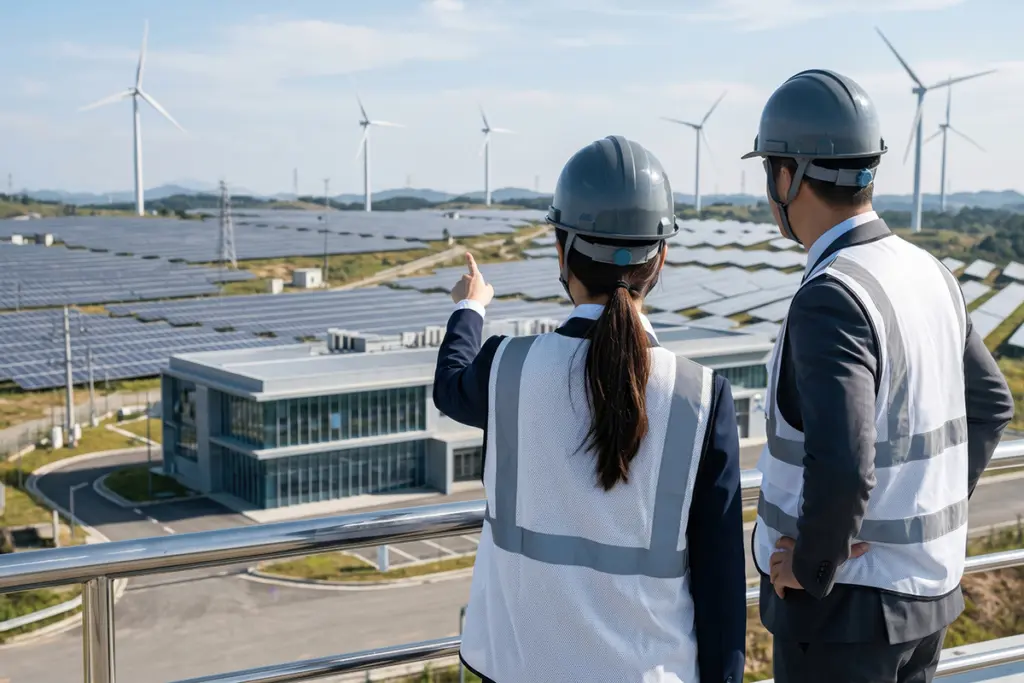
Alongside identifying constraints, the assessment highlighted significant opportunities for onsite renewable generation, battery storage and wider energy infrastructure. Some sites were well suited to rooftop or ground-mounted solar, while others presented opportunities for larger battery storage developments capable of generating long-term commercial value. Rather than increasing dependence on the grid, parts of the estate had the potential to improve resilience while creating new revenue opportunities.
This shifted the conversation from electrification alone to a whole-estate energy strategy.
For energy-intensive organisations, the objective should not simply be replacing fossil fuels with electricity. It should be understanding:
- How demand can be reduced
- Where infrastructure needs strengthening
- Which sites require alternative approaches
- How onsite generation can support long-term resilience
The organisations making the greatest progress are not those electrifying the fastest. They are those building evidence-led strategies that balance operational reality with long-term decarbonisation goals.
Before investing at scale, they understand where capacity exists, where it doesn’t, and how each site can contribute to a practical, commercially viable transition.
That’s what turns net zero from an aspiration into an achievable investment strategy.

ENERGY & RESILIENCE HEALTH CHECK
Is your estate ready for what comes next?
Understand where your estate is ready for electrification, and where constraints could hold you back. Our Health Check helps identify infrastructure risks and opportunities, from grid capacity and asset readiness to renewables, resilience and decarbonisation.