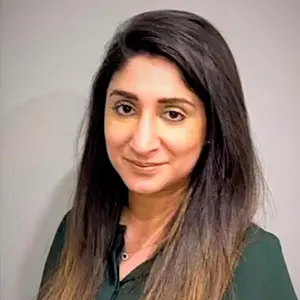
Today the meals served to patients are increasingly recognised for the role they play in recovery. This approach has long been championed by Mitie’s Head of Dietetics and Patient Catering Development, Annu Sharma. For this Perspectives article, Annu reflects on the transformation of hospital food and the crucial factors behind achieving the very best service.
For the last 14 years, I’ve been working as a food service dietitian, focusing on improving patient nutrition and overall experience. This includes menu development, nutritional compliance and enhancing catering in general, from colleague uniforms to crockery and cutlery. So, my remit covers every aspect of the patient catering experience.
In the very best healthcare organisations, patient catering has moved from being a support function to a recognised part of care. Previously clinicians thought about the treatment, without much emphasis on nutrition and food. But nutrition is medicine and there is a more joined-up approach to what people are given to eat and how it aids their recovery.
20,000+ menu combinations daily
People in hospital are also being given more of a say in what they eat – and I’m a strong advocate of that approach. When I was studying, there used to be around two choices per meal. On Mitie’s contract at John Radcliffe Hospital, Oxford, we offer a varied menu on a two-week cycle. Each day, in addition to breakfast options, patients have a choice of two starters, three mains, four sides and six desserts for lunch and supper. That gives them over 20,000 possible menu combinations every day. Whether you’re in hospital overnight, or for several months, you can enjoy a varied diet that contributes to the quality of your stay.
Cultural focus enhances experience too
Ask someone to name a typical hospital meal and often they’ll choose something traditional, such as cottage pie. However, menus have moved with the times. We know patients want food that reflects how they eat at home, so there are dishes reflecting a range of cultures, including chicken korma, fajitas and Moroccan bean casserole. Options can be tweaked to reflect the demographics of the patient population. For example, at St George’s Hospital in Tooting, London, Afro-Caribbean meals are part of the main menu because of the demand in that area.
Control is key
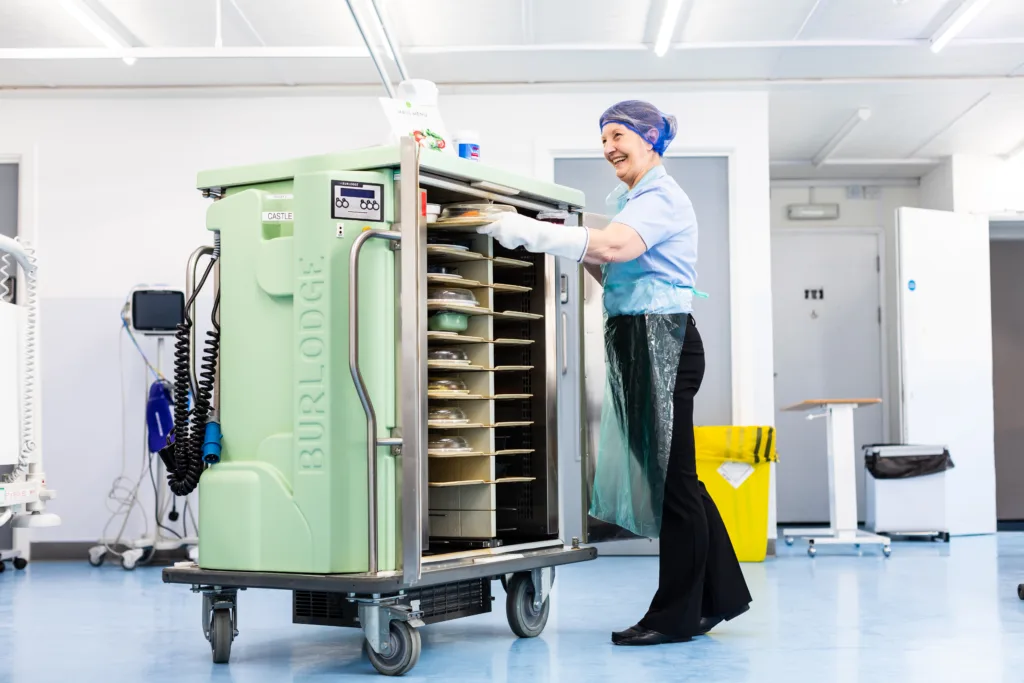
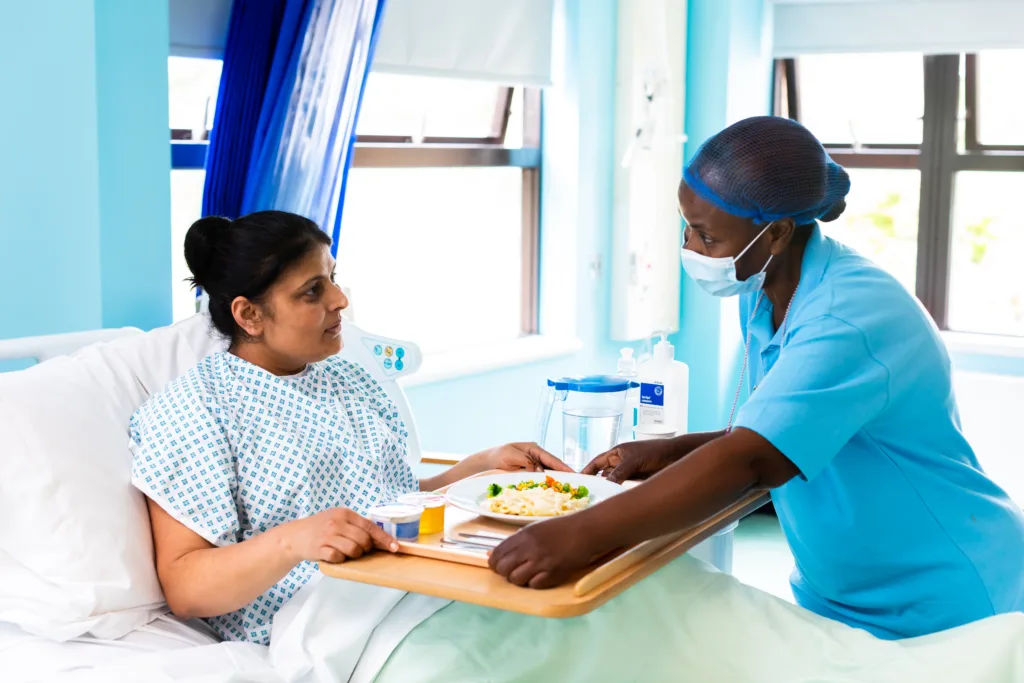
Besides recovery, hospital food plays an important role in patients’ wellbeing and dignity. It’s one of few things the patient has some control over, as well as being a highlight of the day. Our ward hosts may interact with patients up to 18 times daily, but in a very different way to other hospital staff. Rather than poking, prodding, or administering medication, the hosts are there to provide nutrition. That could be a nice bit of cake, or a cup of tea served to the patient’s liking. Bringing that positivity and human touch to someone’s hospital stay can make a big difference.
Kids’ snack trolley is NHS first
Naturally, food also provides young patients with a welcome distraction from their time on the ward. At John Radcliffe Hospital, Mitie introduced the NHS’s first paediatric snack trolley. When it appears, children who are able to do so are encouraged to come over and choose for themselves. There’s a selection of fruit and vegetable crudites, plus ice-cream, cookies, crisps and milkshakes. It’s something for them to look forward to. Even if they haven’t done so well with eating and drinking during the day, they’ll find a nutritious snack on the trolley. The concept has proved so successful, we’re looking to implement it elsewhere.
Technology and data-led service
Technology has been crucial for the transformation of hospital catering. Electronic meal ordering makes it possible for patients to place their food orders on the day, twice a day, as close as possible to the meal service time. This reduces food waste; it’s less likely they’ll order something they don’t feel like eating. Menu QR codes can be scanned to access nutritional and allergen information, or to contact a dietitian with any queries.
The resulting data gives us valuable insight into patients’ meal preferences. We can look at what’s ordered the most, what’s ordered the least and the prevalence of certain preferences. This informs decisions about what we order and how much. The system also allows clinical teams to input individual dietary information. So, if a patient has an allergy to gluten and is following a halal diet, that is recorded without having to rely on whiteboards, clipboards or word of mouth. This makes mistakes much less likely.
What’s next?
Looking to the future, one of the biggest challenges is balancing nutritional quality with patient choice and operational efficiency. We need to be able to cater for an increasingly diverse population, manage clinical requirements and deliver a service that supports recovery within sometimes tight budget constraints.
All of the above must be done with the patient’s recovery in mind. While I know Mitie provides a quality service, there is variation in standards across hospitals and healthcare trusts. I’d love to see more consistency. When clinical and nutrition teams share the same focus, I believe that is the biggest win for recovering patients. Investing in hospital catering ultimately supports better nutritional outcomes, as well as wellbeing, dignity and recovery. It’s so much more than a meal.