
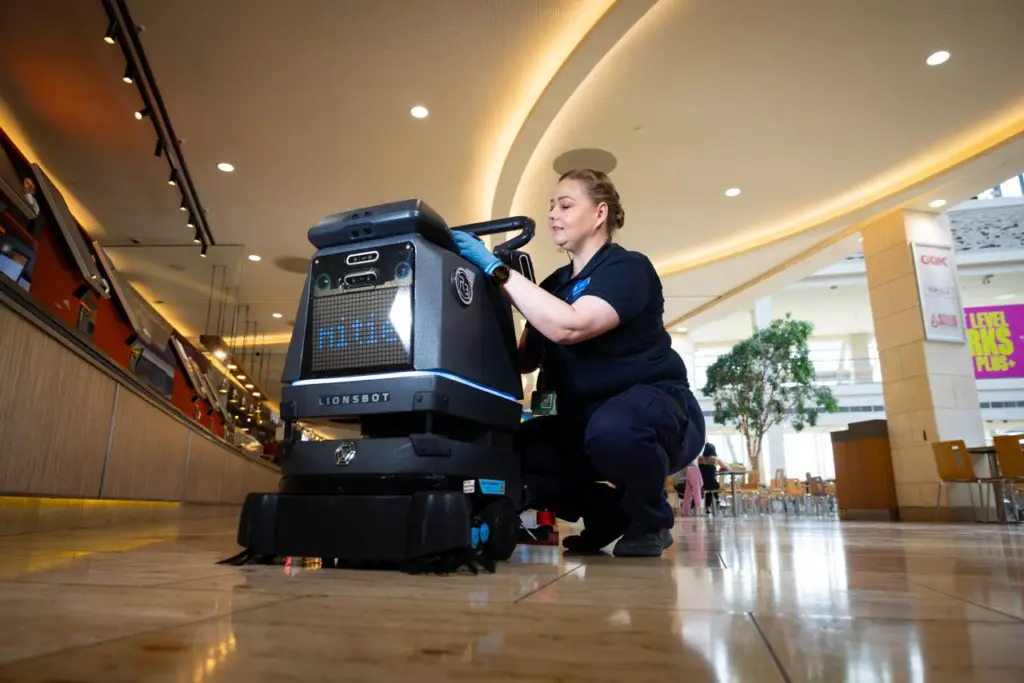

With over 15 years’ experience in the cleaning industry, Mitie’s Head of Innovation and Product Development, Heather Downes, has witnessed its rapid transformation through technology and artificial intelligence (AI). And there are no signs of the pace of change slowing down. For this Perspectives article, Heather reasons that as disruption of the sector continues, gaining buy-in from operatives isn’t just critical for future success, but ultimately benefits individuals and organisations.
AI, robotics and industry transformation. These are currently the hottest topics in cleaning. Earlier this year, I sat on a panel at the Manchester Cleaning Show, where these issues were being debated. And in May 2027, I’ll be at the London Cleaning Show, where an expert panel will once again discuss AI-driven transformation.
While some industries have been quick to accept AI, the cleaning industry has been particularly resistant. I’ve heard the term ‘automation anxiety’ used to describe the general workforce’s attitude across all sectors, including retail. I’ve also seen concerns that transformation and greater efficiency will cost jobs. This just isn’t the case, so it’s important leaders get things right when it comes to communicating the changes in store.
Not about job reduction
I speak from experience when I say it’s no easy task introducing new innovation to cleaning operatives, the sector’s all-important frontline. They’re an incredibly diverse group of individuals, spanning different generations, speaking different languages and bringing a wide range of learning styles and abilities. Something this workforce shares is a tendency towards automation anxiety.
So, what’s the best way to bring them on the transformation journey? I believe it’s vital to get across the positives for the cleaning workforce as a whole. You need to explain the ultimate goal of introducing innovative solutions. It is not about reducing jobs. It’s about supporting operatives in their roles, using technology to enhance what they can achieve during their time at work, whether that be in a supermarket, warehouse, hospital or laboratory.
Transformation means more capable colleagues
There’s another aspect of the impact of transformation that is often overlooked: the personal benefit to individuals. They’re being upskilled. So, cleaning leaders should make sure messaging conveys that confidence using technology and AI is enhancing workplace capability. From an employer’s perspective, individuals are developing valuable digital and operational skills. After all, being comfortable with the use of mobile devices, bespoke cleaning applications and robotics demonstrates adaptability and a wider skillset that improves productivity.
Elevated experiences
Client organisations may not appreciate the many benefits of introducing new technology either. So, it’s equally important to demonstrate what’s in it for them.
The main benefit is what can be achieved by turning data into insights that drive real positive change. Cleaning leaders have heard about digital transformation and know the industry is changing, but they might not realise just how much they have to gain. For example, in a shopping centre, sensor technology can identify not only high footfall areas, but also peak footfall times. This means cleaning schedules can be amended so that the space receives appropriate attention throughout the day, elevating the experience of shoppers passing through it.
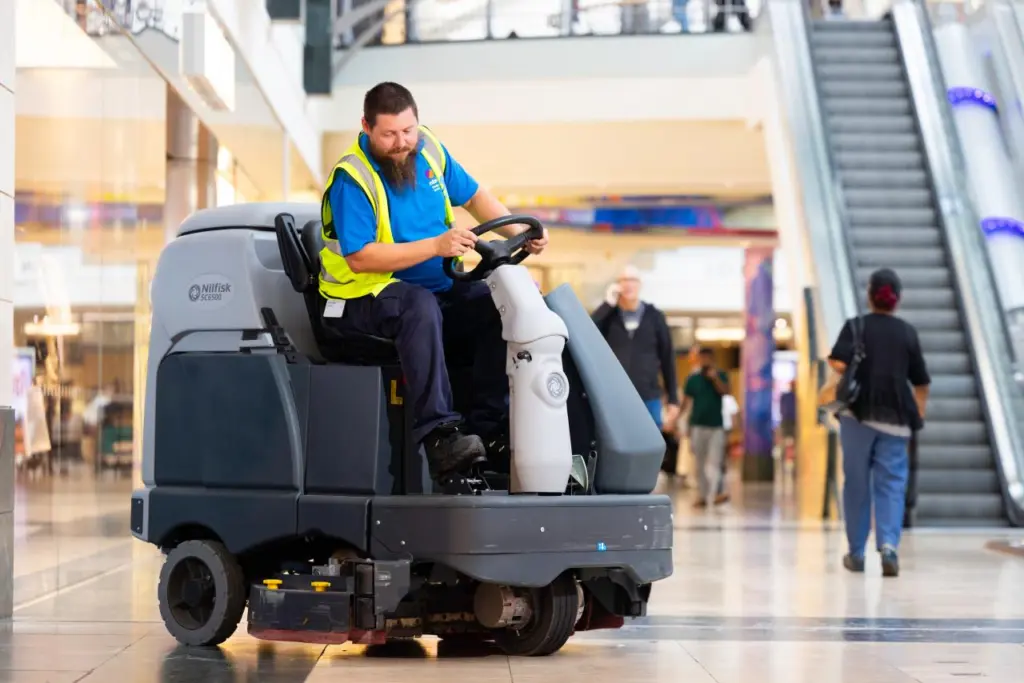
Similarly, if a robotic floor cleaner is used to clean a particular surface area for two hours, that time doesn’t come at the expense of a human operative. It just means they can be redirected to another area of the shopping centre, where a more skilled and focused approach is required.
Real world meaning of efficiency
Mitie’s Merlin application is a good example of what the latest technology can achieve. So, say a cleaning operative has been assigned a meeting room in the headquarters of a large retail organisation, they’ll scan a near field communication (NFC) tag and begin the job.
Data can highlight where cleaning activity may be better aligned to actual demand. This allows teams to make informed decisions about where resource is most effectively deployed. For example, if the data shows the clean is only taking five minutes rather than 15, that means there is 10 minutes that can be redeployed elsewhere. Perhaps there’s a high-traffic washroom near the ground-floor entrance that data shows needs an extra 10 minutes of cleaning. The labour can be redistributed to cover the shortfall.
At the end of each day we have the data to show what has been achieved. When it comes to driving efficiency, the benefits are considerable. But you have to be able to convey what that efficiency means in the real world.
Automation opportunity
At Mitie, we have data insights, cleaning robots and AI-backed spill detection with autonomous cleaning response. These are already benefiting organisations across retail, healthcare, critical environments and more.
The next step is to embed an automated, streamlined agentic approach right across cleaning delivery. This means moving from using data to understand what cleaning should be done to using AI to decide, coordinate and execute cleaning activity autonomously. It will further transform the cleaning industry and may create new concerns about automation. However, I firmly believe any concern is misplaced.
Colleagues will be empowered to focus on higher value tasks and driving service quality, while customers will see further efficiencies and improved outcomes. It’s automation opportunity.