 Skip to content

Mitie’s Net Zero Navigator reveals risks of delaying decarbonisation
- Decarbonisation is increasingly viewed a business and economic imperative, not just a climate ambition
- Falling costs for solar, battery and other renewable technologies are reshaping investment decisions, with organisations that can demonstrate robust compliance and a strong business case best positioned to unlock access to private capital
- However, hurdles remain including an emerging water shortfall, delays in securing grid connections, and a growing green skills gap
Research from Mitie’s latest Net Zero Navigator report shows that organisations achieving the greatest decarbonisation progress are those embedding net zero into their core business strategy, rather than treating it solely as a compliance obligation. Drawing on insight from sustainability leaders, the report highlights an increasing emphasis on energy resilience, operational compliance and long-term cost stability to enhance the commercial benefits of decarbonisation for organisations.
Where private capital meets clean power ambition
Despite nearly three quarters (71%) of sustainability leaders reporting increasing difficulty in accessing finance for decarbonisation over the past year, in part due to a decrease in public sector funding schemes, the availability of private capital is increasing. The private sector is expected to contribute between 65% and 90% of the £40 billion investment required each year to meet the UK’s 2030 clean power target which will unlock new opportunities for organisations which can demonstrate a strong business case.
Falling costs for solar, battery and other renewables is increasing investment appeal, and so robust business cases, coupled with evidence of compliance, remain essential. Yet over a third (33%) of leaders say they need better access to data and reporting technology to support compliance and risk management amid evolving energy efficiency regulations. Additionally, recent schemes such as the National Energy System Operator’s Demand Flexibility Service will support investment in renewable technologies, with almost half (49%) of respondents planning to invest in on-site battery storage in 2026.
Water is the one to watch in 2026
Despite the potential for private sector funding, significant barriers remain to achieving net zero ambitions, including water scarcity, delays in securing grid connections and ongoing skills shortages. In 2026, water will require the same level of strategic focus as energy. As costs rise and regulation tightens, switching service providers could deliver more competitive pricing, yet one in twelve sustainability leaders (8%) remain unaware of UK water reduction targets. Organisations can begin addressing this by reviewing their water footprint through measures such as smart metering and by making simple operational changes, including reducing chemical use or implementing water-efficient processes.
Mitie’s decarbonisation experts share top tips on how to navigate the fast evolving decarbonisation landscape, including:
- Creating high-performing buildings: To meet new EPC standards, organisations should identify steps to improve the EPC rating of their building and sustainability of their operations, starting with the quick wins and building strong business cases for investment for larger projects
- Increasing investment in energy storage: With grid reform, clean energy projects are expected to accelerate, driving investment in on-site energy and battery storage enabling organisations to store and use clean energy as an effective way to offset price hikes as well as creating commercial opportunities including the resale of power back to the grid during periods of peak demand
- Evolving net zero strategies: Business strategies must see net zero as being about building resilience and no longer purely about carbon and climate. To stay agile, organisations need stronger digital tools to ensure compliance and access to green financing, including exploring private finance partnerships to unlock funding as public schemes scale back
- Accelerating green-skills uptake: Net zero is now as much about creating resilient, ‑future ready organisations as it is about cutting carbon. A rapid expansion of workforce training and upskilling is needed to plug the green-skills shortage which threatens to slow progress
This year’s report also includes insights from Dr Rhian-Mari Thomas OBE, Chief Executive Officer of the Green Finance Institute. Dr Thomas highlights that a “wait-and-see” approach wields higher risk than engaging proactively in the decarbonisation agenda and could lead to higher long-term costs, compliance challenges and operational disruption.
Mark Caskey, Managing Director, Projects, Mitie, said:
“As decarbonisation efforts accelerate now is the time for organisations to take decisive action and secure investment. Our findings show that integrating net zero projects into core business operations delivers real economic and energy security benefits. Organisations can stay ahead of the curve by investing in energy storage, creating better-performing buildings, and managing water usage as closely as their energy resources.”
Research conducted by Opinium on behalf of Mitie from 16 October 2025 to 22 October 2025. Survey of 100 senior managers with responsibility for corporate sustainability at companies with over 1,000 employees.
Read next
Top barriers to net zero revealed by sustainability leaders
Over four in five (84%) sustainability leaders are confident they can align with the UK Government’s ambitions to reduce carbon emissions by 68% by 2030, according to Mitie’s new ‘Net Zero Navigator’ report. Despite…
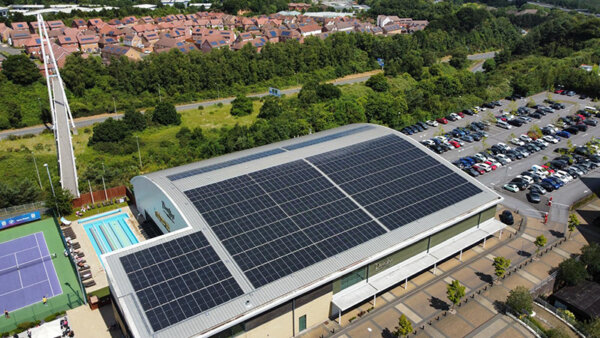
A step towards net zero for David Lloyd Leisure, with Mitie Custom Solar
David Lloyd Leisure aim to become net zero by 2030, and Mitie Custom Solar have been working with them to add solar PV panels to their clubs.
Build a decarbonisation business case that speaks volumes
Building a credible business case for decarbonisation matters – but how do you articulate it to senior decision makers? Plan Zero Director, Mike Sewell, explains. There’s no way around it – decarbonisation must become…